
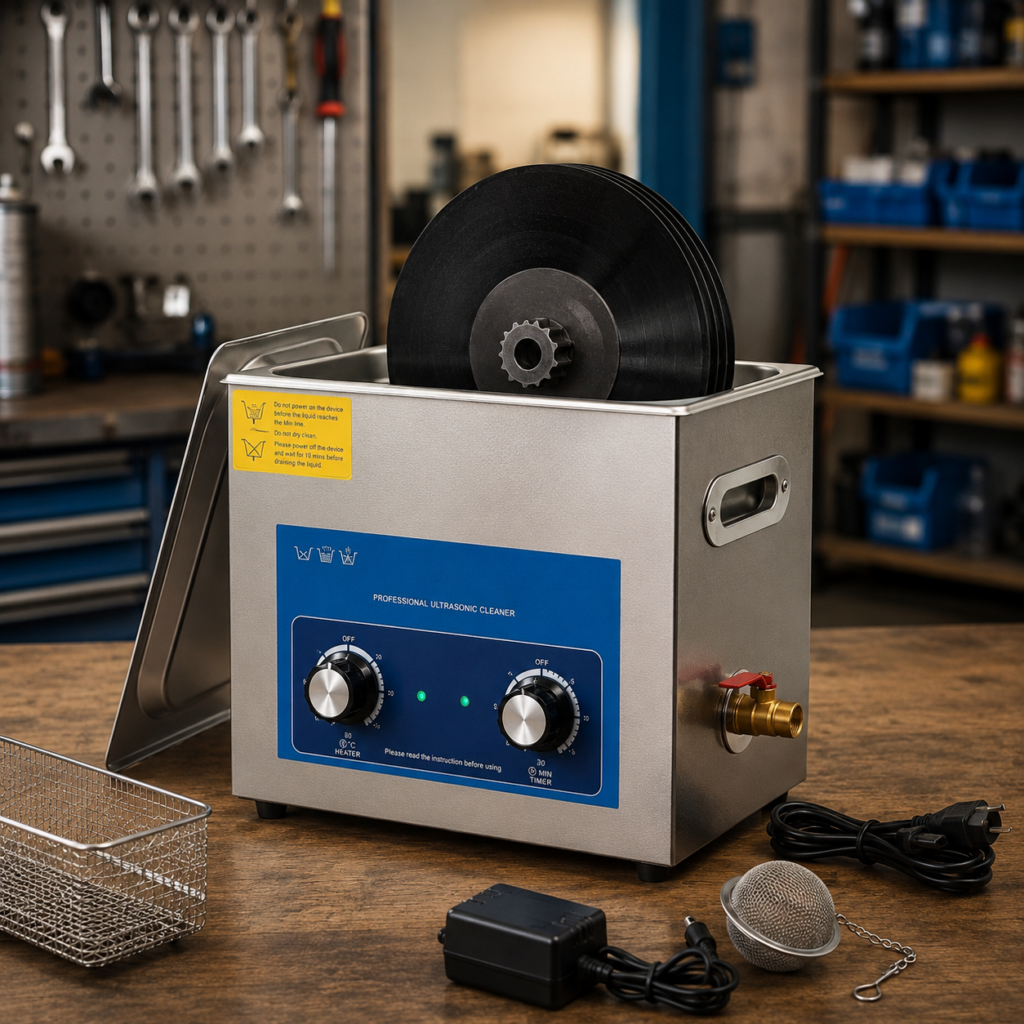
Cleaning parts and components in a busy industrial environment is not always simple. Grease, oil, rust, and stubborn residues can build up quickly, while traditional cleaning methods are often not enough. This is where an industrial ultrasonic cleaner comes in. This technology uses high-frequency sound waves to create tiny bubbles that collapse when they come into contact with surfaces, removing even stubborn contaminants from hard-to-reach areas.
Businesses in manufacturing, automotive, aerospace, medical, and electronics industries are turning to this solution because it can save time, reduce chemical usage, and deliver consistent results. But with so many options available, how do you choose one that actually matches your specific needs?
Understand What You Need to Clean
Before looking at a machine’s specifications, it is useful to consider what your business needs to clean on a daily basis. The type of parts, their size, their material, and the type of contamination involved will influence every decision that follows. Delicate electronic components require a gentler approach than heavy metal parts covered in cutting oil or carbon deposits.
Some materials, such as aluminum or certain plastics, can be sensitive to specific frequencies or cleaning solutions. Understanding your parts properly will help you avoid buying a machine that could damage your products or simply fail to provide the level of cleaning you need.
Tank Size and Capacity Matter More Than You Might Think
One of the most practical considerations when choosing an industrial ultrasonic cleaning machine is the tank size. If your parts are large or you process high volumes throughout the day, a small tank can slow everything down and create a bottleneck in your workflow. On the other hand, a tank that is much larger than necessary can waste energy, water, and cleaning solution.
As a general rule, choose a tank in which your largest part fits comfortably without touching the sides or bottom. Contact with the tank walls can reduce cleaning efficiency and may potentially damage both the part and the tank. You should also consider future growth, since upgrading to a larger machine later can be expensive.
Pay Attention to Frequency and Power
Ultrasonic cleaners operate at different frequencies, and this detail has a direct impact on cleaning performance. Lower frequencies, generally around 25 to 40 kHz, produce larger and more aggressive bubbles, making them suitable for heavy-duty cleaning of hard metal parts. Higher frequencies, around 68 to 170 kHz, are better suited to sensitive or precision components that require gentler cleaning action.
Power is equally important because it determines how effectively the machine can clean under load. A machine that looks powerful on paper but lacks consistent power density throughout the tank may deliver uneven results. Always check the frequency range and actual power distribution before making a decision.
Consider Heating and Filtration Features
A good ultrasonic cleaner for industrial use will almost always include a heating function. A warm cleaning solution generally works more effectively than a cold liquid because heat helps break down oils, grease, and other contaminants more quickly. Many industrial applications work well with solution temperatures between 50 and 70°C, although the ideal temperature can vary depending on the material being cleaned.
Filtration is another feature worth considering, particularly if you clean large quantities continuously. An integrated filtration system keeps the cleaning solution cleaner for longer, helping reduce operating costs and maintain consistent cleaning quality throughout the day without requiring frequent solution changes.
Examine Build Quality and Long-Term Reliability
An industrial environment can be demanding on equipment, and your cleaner needs to handle those conditions. Look for machines with stainless-steel tanks because they offer good corrosion resistance and are easier to maintain. The transducers, which generate the ultrasonic waves, should ideally be securely integrated with the tank rather than relying on weak adhesive mounting. Poorly secured transducers can loosen over time and contribute to premature equipment failure.
It is also worth checking the manufacturer’s reputation, warranty terms, and availability of replacement parts. A machine that frequently breaks down or cannot be repaired quickly can disrupt your entire operation. Reliability should therefore be treated as a priority rather than an afterthought.
Think About Ease of Operation
An industrial ultrasonic cleaner should not make your employees’ jobs unnecessarily complicated. Look for a straightforward control panel with clearly marked settings for temperature, cleaning time, and ultrasonic power. Digital controls can make it easier to repeat the same cleaning cycle and maintain consistent results between batches.
Automatic timers can also be useful in busy workshops. Once the appropriate cycle has been selected, operators can start the process and focus on other tasks while the machine works. Features such as automatic shutoff can provide additional convenience and help prevent unnecessary operation.
Match the Machine to Your Daily Workflow
The best cleaner is not necessarily the biggest or most powerful model available. Instead, it should match the way your business actually operates. Consider how many batches you clean each day, how long each cleaning cycle takes, and whether the machine will be used continuously or only occasionally.
For high-volume operations, a larger tank, faster heating, efficient filtration, and durable construction may justify a higher initial investment. For smaller operations, a compact machine with the right frequency and capacity may provide better value without taking up unnecessary floor space.
It is also helpful to consider how parts will be loaded and unloaded. Baskets, handles, drain valves, wheels, and accessible controls can make a noticeable difference when a machine is being used repeatedly throughout the day.
Don’t Ignore Maintenance Requirements
Even a high-quality ultrasonic cleaner requires regular care. Cleaning the tank, replacing or maintaining filters, checking fluid levels, and inspecting electrical connections should become part of the normal maintenance routine.
The cleaning solution should also be changed according to the manufacturer’s recommendations and the level of contamination. Dirty solution can reduce cleaning performance and may leave contaminants on parts rather than removing them effectively.
A simple maintenance schedule can help extend equipment life and prevent unexpected downtime. It is much easier to spend a few minutes on routine checks than to deal with an avoidable equipment failure in the middle of a production run.
Consider Safety and Cleaning Solutions
Safety should always be part of the purchasing decision. Make sure the machine is suitable for the cleaning chemicals you plan to use and follow the manufacturer’s instructions regarding temperature, fluid levels, and operating conditions.
Operators should also understand that ultrasonic cleaning does not mean every object can be placed into the tank without preparation. Some delicate components, sealed assemblies, and sensitive materials may require special procedures. Proper training helps prevent damage to both the equipment and the items being cleaned.
Conclusion
Choosing the right industrial ultrasonic cleaner for your business is really about matching the machine to your actual workflow rather than simply buying the most expensive or most popular model. Think about what you clean, how often you clean it, and the volumes you process. Consider tank size, frequency, power, heating capacity, filtration, ease of operation, and overall build quality as a complete package rather than as individual features.
Take the time to compare manufacturers and read reviews from businesses operating in similar industries. When the right machine is in place, the improvement in productivity and cleaning quality can become noticeable very quickly, making ultrasonic cleaning a valuable investment for many industrial operations.