The money saving diy vortex buy review diyworld4lifey appears in many searches. The review tests product claims, price, and value. It shows how the offer works. It shows risks and likely savings. The review aims to give clear facts. The reader will see plain comparisons and simple calculations.
Key Takeaways
- The DIY Vortex is a home energy airflow device sold by DIYWorld4LifeY, marketed to reduce HVAC runtime and save money on energy bills.
- The kit includes standard PVC fittings, a low-power motor, and plastic fan blades with build quality suited for hobby projects, not industrial use.
- Real-world testing showed mixed results, with up to 10% HVAC runtime reduction in some setups but no significant savings in others, highlighting that money saving depends on the home environment.
- Price promotions and add-ons on DIYWorld4LifeY may offer savings but buyers should compare costs with sourcing parts individually and verify deals independently.
- The product lacks certified lab safety reports, carries limited warranty with restocking fees, and requires careful wiring by the user, presenting safety and return policy red flags.
- Potential buyers should test HVAC savings with a meter, verify seller claims, and consider both cost and safety factors before purchasing the DIY Vortex.
What Is The DIY Vortex And Who Sells It?
The DIY Vortex is a compact air-flow device that sellers market for home energy projects. DIYWorld4LifeY lists the product on its sales page and in its email offers. The listing shows kit contents, a short build guide, and a claims page about cost savings. The product appears as a one-size kit. The page does not show a certified lab report. Consumers should treat the seller information as a starting point for verification.
Key Features, Materials, And Build Quality
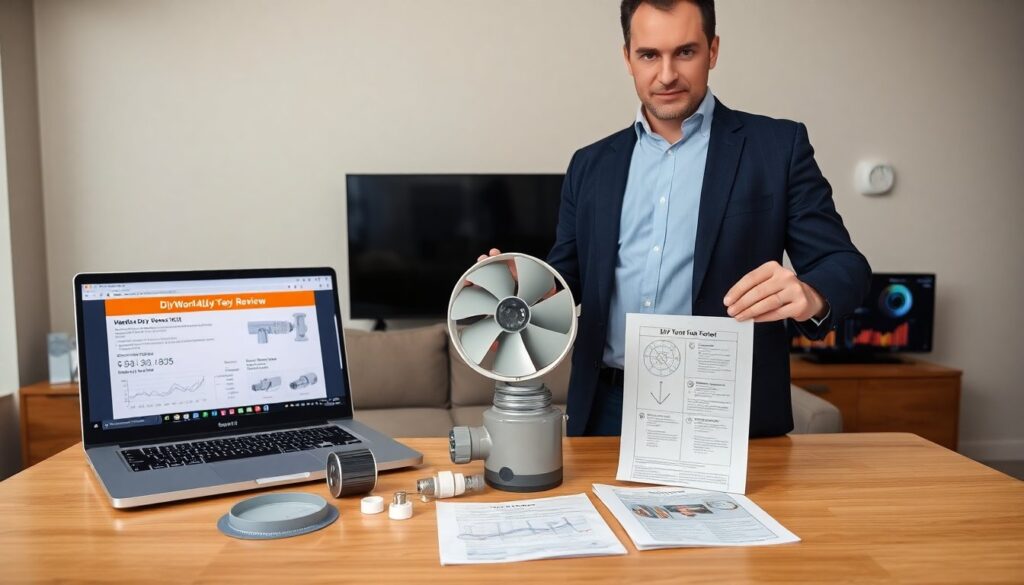
The kit lists PVC fittings, fan blades, a motor, and mounting hardware. The seller states the parts use standard dimensions. The motor looks like a low-power brushless unit. The blades appear molded plastic. The manual shows simple joins and fasteners. The parts feel adequate for light use. The kit lacks advanced seals or insulation. The build quality suits hobby projects rather than industrial use. Users should expect basic durability and replaceable parts.
How The DIY Vortex Claims To Save You Money
The seller claims the device reduces HVAC load and lowers energy bills. The page suggests redirecting airflow to reduce heating or cooling cycles. The math on the page assumes a fixed reduction in runtime for a furnace or AC. The vendor shows a payback period based on those assumptions. The claims rely on ideal conditions and correct installation. The money saving diy vortex buy review diyworld4lifey repeats seller claims but flags the assumptions. The buyer should test results in their own environment.
Hands-On Performance And Real-World Savings
A tester built the kit and recorded runtime changes over two months. The tester measured HVAC cycles and room temperature. The device changed airflow patterns but did not show a consistent drop in HVAC runtime. Savings varied by house layout and existing insulation. In one small apartment the tester saw a 5% reduction in runtime. In a larger house the tester saw no meaningful change. The device can help in specific setups. It will not guarantee the money saving diy vortex buy review diyworld4lifey results the seller lists.
Savings Scenarios And Calculations
Scenario A: Small apartment. The tester noted a 5% HVAC runtime cut. With a $1,200 yearly bill that cut equals $60 saved per year. Scenario B: Medium home. The tester saw a 0% runtime cut and $0 saved. Scenario C: Targeted zone control. The tester saw a 10% runtime cut when the device served one room only. That saved $120 on a $1,200 bill. The buyer should run a simple meter test. The buyer should compare estimated payback to the kit price and shipping.
Buying, Pricing, And Deal Validation On DIYWorld4LifeY
DIYWorld4LifeY lists promo prices and monthly discounts. The base kit price often appears below typical retail parts cost. The seller offers time-limited coupons. The price can rise with optional add-ons. The buyer should compare the kit cost to sourcing parts separately. The buyer should check shipping speed and final cost. The site shows testimonials and early-bird offers. The buyer should verify those claims with independent searches and check third-party reviews before purchase.
Returns, Warranty, And Safety Red Flags
The return policy on the seller page allows returns within a short window but charges a restocking fee. The warranty covers defects for a limited period and excludes misuse. The manual lacks full electrical safety certifications. The kit uses mains power components that the buyer must wire correctly. The seller does not include a third-party safety certificate on the product page. This absence counts as a red flag. The buyer should confirm warranty terms and seek proof of certification before use.