
Remove moss from a Seattle roof by brushing it off gently on a dry day. Brush the moss down the slope, and do not use a pressure washer. If the moss is thick or the composition roof is more than 20 years old, take precautions and have the roof inspected before cleaning it.
In Seattle, moss on a roof is a common issue because of long periods of damp weather. It tends to build up faster on shaded parts of the roof, especially where nearby trees keep the surface wet for longer.
If the moss is still light, it can usually be removed by brushing it off by hand on a dry day, always working down the roof slope so the shingles are not lifted or damaged. A pressure washer should not be used on roofing because the force can damage the surface and shorten the life of the roof. Moss-killing products also need care, particularly where gutters drain into the street.
While cleaning, keep in mind the age of the roof. Thick moss on a composition roof that is more than 20 years old may be covering worn or damaged shingles, so it makes sense to have the roof inspected before spending money on cleaning.
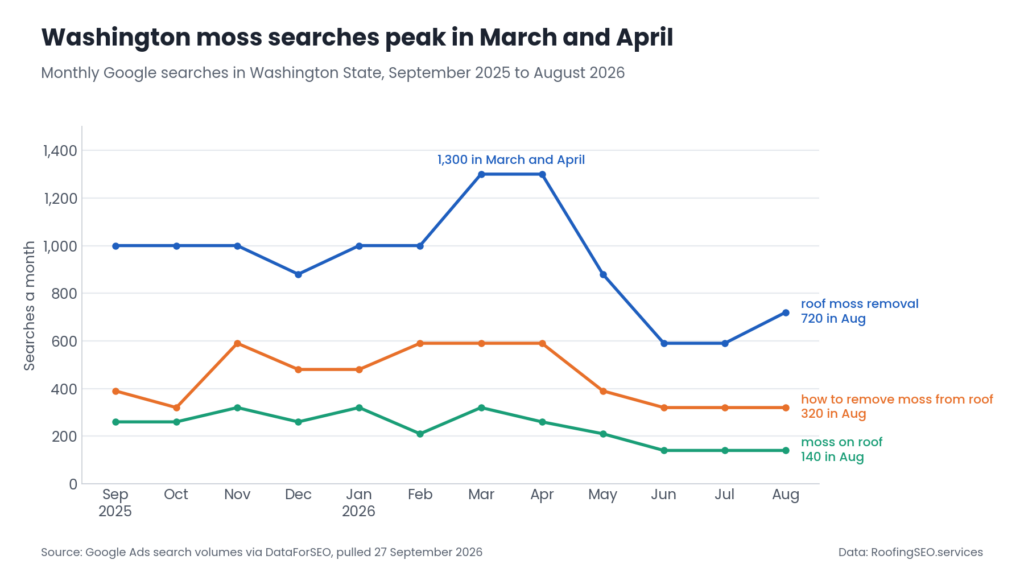
This topic is frequently searched in Washington. Around 1,000 people a month search for “roof moss removal,” with searches rising to about 1,300 in March and April, according to Google Ads data compiled by RoofingSEO.services.
This guide explains why moss grows so easily in Seattle, how it can affect a roof, the safest way to remove it, when moss killers or zinc strips may be useful, and when heavy moss is a sign that the roof itself may need more than cleaning.
Why does moss grow on Seattle roofs?
Moss grows on Seattle roofs because the roofs stay wet for months and shaded slopes never fully dry between storms. Seattle-Tacoma International Airport averages 39.34 inches of precipitation a year, with measurable rain or snow on about 156 days, according to NOAA’s 1991 to 2020 climate normals. November, December and January are the wettest months, at 6.31, 5.72 and 5.78 inches.
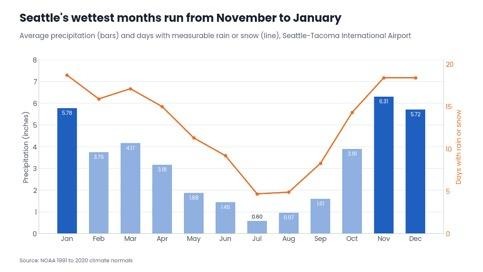
Figure 2: Seattle’s wettest months run from November to January. Image file: seattle-rainfall-months.png
Seattle is quite a moist place with ideal conditions for moss growth, but shade and roof debris often decide where it starts. North-facing slopes usually dry more slowly because they receive less winter sun. Roofs below Douglas fir, cedar and maple trees can also collect needles and leaves, especially in valleys and gutters. That debris traps moisture and keeps parts of the roof wet for longer. Moss often appears first on the north-facing side, then spreads along shingle edges and into the gaps between tabs.
Does moss damage a roof?
Yes, moss can damage a roof because it keeps the surface damp and can push up the edges of shingles as it thickens. Malarkey Roofing Products, the Portland shingle manufacturer, states that “moss can cause the leading edges of shingles to lift or curl, which increases the risk of shingle blow-off during wind events.” Once a shingle edge lifts, wind-driven rain has a better chance of reaching the nail line and underlayment.
Heavy moss can also create problems lower down the roof. Pieces of moss and other debris can collect in gutters and downspouts and slow the flow of water. If water starts to back up at the eave, it can reach areas that should normally stay dry.
B&J Roofing, a Redmond roofing contractor that has worked in the Seattle area since 1976, describes the same problem on its page about roof repair in Seattle: “Once moss growth thickens along shingle lines, ridges, or shaded edges, it starts holding moisture in exactly the places that should be drying out.”
How do you remove moss from a roof safely?
Remove roof moss safely by brushing it off by hand with a brush or broom, working from the ridge down the slope, on a dry day. Oregon State University Extension gives the same instruction: “Use a brush or broom to remove the moss,” and “Don’t use any sort of high-pressure device.” Follow five steps:
1. Choose a dry day. A wet, mossy roof is slippery, and OSU Extension warns that the work “can be dangerous, due to the slippery surface of the roof.”
2. Work from a ladder at the eave or with fall protection on the roof. Hire a registered contractor for a steep or two-story roof.
3. Brush down the slope, never up it, so the bristles do not lift the shingle edges the moss has already loosened.
4. Clear the gutters and downspouts of the moss you brush off.
5. Bag the moss, rather than hosing it off the roof or into the street.
Pressure washing does the most harm. The City of Kirkland’s environmental services team advises “hand tools, not power washing” for roofs, because “power washing can damage shingles or get water under them.” Malarkey adds that pressure washing dislodges a shingle’s granules, “their primary defense against damage and UV aging.” B&J Roofing tells Seattle homeowners the same thing in its FAQ: never pressure wash a roof, and use air cleaning instead.
Are moss killers safe to use in Seattle?
Not exactly; most moss killers used in Seattle aren’t safe. Most of them are toxic chemicals and hazardous to the environment. After they rinse off the roof, they reach local streams, lakes, and may even seep into groundwater.
So, before starting a moss treatment on a Seattle roof, check where the rinse water will go. In many areas, water from roofs and driveways enters the stormwater system and then flows to local streams, lakes or Puget Sound. It is not treated in the same way as household wastewater. The City of Kirkland explains it clearly: “Everything that washes into a storm drain flows directly to the nearest wetland, stream or lake without any treatment.”
That is important when choosing a moss killer. Zinc sulfate is one of the products commonly sold for roof moss, but it should not simply be washed into the street. The University of Washington’s Elisabeth C. Miller Library describes zinc sulfate as “the most common product sold for moss removal” and also warns that it is “a pollutant and… toxic to aquatic life.”
Bleach is another widely suggested treatment, but it creates the same runoff problem. Google’s AI answer for “roof moss removal” in Seattle recommends a 50/50 bleach-and-water mix. Malarkey also lists that mixture, while warning that it can have “unsightly downstream impacts on the local environment.” As a less toxic alternative, Malarkey suggests white vinegar mixed with water, using 1.5 to 3.5 cups of vinegar for every 2 gallons of water.
If you do use a treatment, do not let the runoff flow straight into a street drain. Where possible, direct the downspout onto a lawn, rain garden or swale instead. Washington State University Extension notes that soil and plants can help remove contaminants as roof runoff soaks into the ground.
Do zinc strips stop roof moss?
Zinc strips can help slow moss growth, but they only affect the part of the roof below the strip. When it rains, a small amount of zinc washes off and runs down the roof. That can make it harder for moss to grow on the shingles underneath.
The University of Washington’s Miller Library describes zinc strips as a common long-term way to control moss. However, it also warns that the zinc does not disappear after it leaves the roof. It goes into the runoff, so that water should not be allowed to flow into fish ponds, water supplies or areas where it could harm plants.
The City of Kirkland gives similar advice, and it warns against zinc-treated roofing where the runoff goes into the stormwater system or into rain barrels used to water vegetable gardens.
Some roofing manufacturers also recommend zinc or copper when a roof is replaced. Malarkey, for example, advises the use of zinc or copper strips and also makes shingles with copper granules to help resist algae.
Copper creates another concern in the Pacific Northwest. Washington State University Extension reports that even very low levels of copper can affect a coho salmon’s sense of smell. Salmon depend on that sense to detect predators and find their way back to spawning areas.
For many homeowners, the simplest way to reduce moss is to make the roof less damp in the first place. Cut back branches that keep the roof shaded, and clear needles and leaves from valleys and gutters each fall. More sunlight and better airflow help the roof dry faster, which gives moss fewer chances to take hold.
When does moss mean the roof needs replacing?
Moss means the roof needs replacing when it has lifted shingles across whole slopes, the granules are gone, leaks keep coming back, or the roof is past its service life for its material. B&J Roofing, which works across the Seattle area, gives service lives for North Bend’s wet climate of 20 to 24 years for composition shingles, 18 to 20 years for wood shake, and 35 to 45 years for metal or tile, shorter than manufacturers’ ratings. A composition roof at 20 years with heavy moss is due an inspection, not another cleaning.
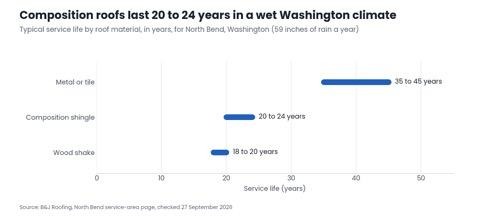
Figure 3: Composition roofs last 20 to 24 years in a wet Washington climate. Image file: roof-service-life.png
Three signs point to replacement rather than cleaning:
• Shingles that stay curled or lifted after the moss is brushed off.
• Bare patches where the granules have washed away, visible as dark streaks or granules piled in the gutters.
• Soft decking at the eaves or in the valleys, where water has been sitting on the sheathing.
A roofer should say whether a clean and repair will buy several more years or whether the roof is at the end of its life. B&J Roofing’s guide to roof replacement in Seattle lists the signs that a Seattle roof has moved past repair.
What should you check before hiring someone to remove roof moss?
Before hiring someone to remove roof moss, ask them about the moss removal method they use, where the runoff goes, and also ensure that the contractor has state registration.
Check the contractor’s registration with L&I
Before hiring a roofing contractor in Washington, check that the business is registered with the Department of Labor & Industries. You can do this in about a minute with the L&I Verify a Contractor, Tradesperson or Business tool.
The search shows whether the contractor’s registration is active and whether the business has the required bond and workers’ compensation coverage. It can also show safety violations.
This check gives you a quick way to confirm that the contractor is properly registered before any work starts. If a crew is not registered, you may have no contractor bond to make a claim against if something goes wrong, and you have no clear proof that workers’ compensation coverage is in place.
Ask how the moss comes off
Ask the contractor to describe the removal method in writing, and turn down any quote that includes pressure washing. Hand brushing and air cleaning protect the granules. A contractor should also say what, if anything, will be applied afterward and where the rinse water will drain.
Ask for a roof condition report
Ask for photographs of the roof after the moss is off, with notes on lifted shingles, granule loss and flashing. Moss hides damage, and the day it comes off is the cheapest day to find it.
Which roofs resist moss?
Metal roofs resist moss best, because they shed water fast and give moss nothing to grip. B&J Roofing notes that metal “costs more upfront and pays that back in lifespan” on wet, shaded Bellevue lots. Algae-resistant shingles with copper granules are the lower-cost option, with the runoff trade-off described above.