
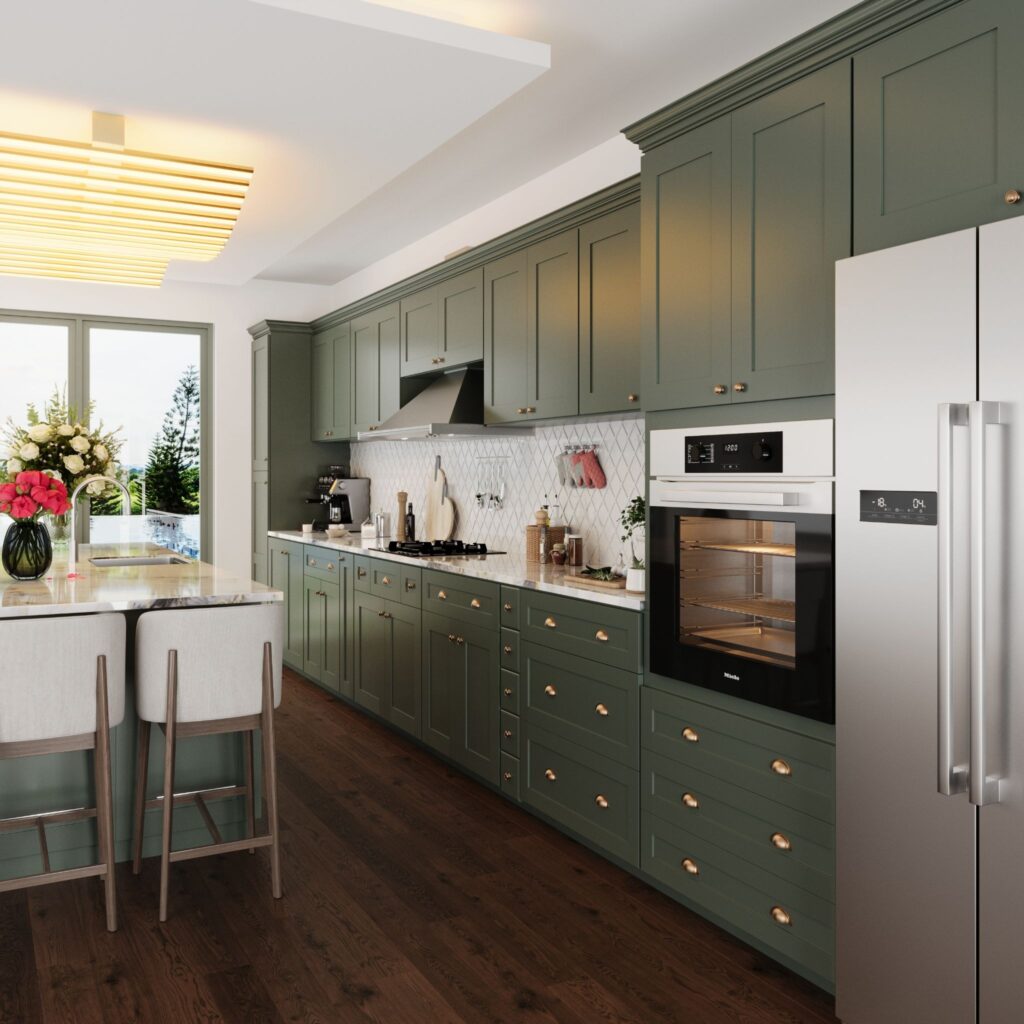
Cabinet installation is one of the few major kitchen tasks that sits genuinely on the fence between DIY and hired work. Some homeowners take it on and save a real share of their budget. Others start, hit a wall, and call someone halfway through, which costs more than hiring from the start. The deciding factor is rarely talent. The short version: weigh five things, the money saved, the time it takes, the skill required, the risk if it goes wrong, and how complex your kitchen is, and the choice between installing cabinets yourself and hiring a pro usually makes itself.
How Much You Save Installing Cabinets Yourself
Installation labor is a meaningful slice of a kitchen budget, often a significant fraction of the total project. Doing it yourself converts that labor cost directly into savings, which is the main argument for DIY.
The savings are larger with ready-to-assemble cabinets, because you absorb both the assembly and the installation labor. RTA lines already cost 40 to 60 percent less than comparable pre-assembled cabinets, and installing them yourself stacks the labor saving on top. For budget-minded homeowners, an unfinished shaker base cabinet line takes this furthest, shipping flat to assemble and finish yourself, though it also adds the most labor to your side of the ledger. The question is whether the dollars saved justify the hours and risk that follow.
How Long Does It Take to Install Kitchen Cabinets?
DIY installation is not fast, especially the first time. A motivated homeowner can install a full kitchen’s cabinets over a weekend, but that assumes preparation goes smoothly and nothing surprising turns up behind the old cabinets. RTA adds an assembly step on top, though each box only takes 15 to 30 minutes to put together.
A professional does the same work faster because they have done it hundreds of times. So the real trade is your unpaid weekend (or two) against the pro’s paid day. If your time is scarce or the kitchen needs to be back in service quickly, the math tilts toward hiring even when DIY would save money on paper.
What Skills Do You Need to Install Cabinets?
This is where many homeowners misjudge in both directions. Cabinet installation does not require trade-level skill, there is no specialized craft to master. What it requires is patience and precision: the willingness to measure twice, check level and plumb at every step, and not rush to fasten.
The core of the job is straightforward in principle. Base cabinets must go in dead level regardless of the floor, so you work to a level reference line drawn from the floor’s high point and use shims to make up the difference, rather than following the floor itself. Cabinets must anchor into solid wall studs, located with a stud finder, never into drywall alone, which will not hold a loaded cabinet. Many installers hang the wall cabinets first so the base cabinets are not in the way during overhead work. If those concepts make sense to you and you own or can borrow a drill, a level, a stud finder, clamps, shims, and a square, the skill barrier is low.
The Cost of Cabinet Installation Mistakes
Every DIY decision should account for the downside, and here it is concrete. The most common installation errors are predictable: ignoring an unlevel floor so base cabinets sit crooked and countertops will not fit, anchoring into drywall instead of studs, over-tightening RTA assembly fasteners until a panel cracks, and fastening a cabinet before confirming it is square and plumb, which makes doors hang unevenly across the run.
None is hard to avoid, but the consequence of missing one can be expensive, a misaligned run can mean a countertop that does not sit right, which is far costlier than the labor you set out to save. A professional carries the risk of those mistakes; a DIYer carries it themselves. If your cabinets or countertops are expensive enough that an error would hurt, that risk weighs toward hiring.
When to Hire a Pro Based on Your Kitchen
The kitchen itself tips the balance. A simple, square, single-wall or galley layout with standard cabinets is the friendliest possible DIY project. A kitchen with many corners, an island, odd angles, soffits, or out-of-square walls multiplies the chances for error and the skill required to handle them.
Older homes with settled, uneven floors and walls also raise the difficulty, since more shimming and adjustment is needed to get everything true. Be honest about which kitchen you have. A straightforward layout forgives a first-timer; a complicated one punishes them.
Frequently asked questions about installing cabinets
How much can I save installing cabinets myself? You save the installation labor, a significant share of the project. With RTA cabinets you also save by assembling them yourself, on top of their 40 to 60 percent lower cost versus pre-assembled lines.
Do I need special skills to install cabinets? No specialized trade skill, but real patience and precision. The work is measuring, leveling, shimming, and anchoring into studs, achievable for anyone careful and comfortable with basic tools.
What’s the most expensive mistake to avoid? A base run that is not truly level, which can leave a countertop unable to sit properly. Installing to a level line and shimming, rather than following the floor, prevents it.
When is hiring clearly the better call? When the layout is complex (islands, many corners, out-of-square walls), when the cabinets or counters are costly enough that an error would hurt, or when your time is too scarce for a weekend project.
Is a flat-pack kitchen harder to install myself? It adds an assembly step, 15 to 30 minutes per box, but flat-pack also ships easily into tight spaces and uses the same tools as installation. For simple layouts it is very DIY-friendly.
There is no universally right answer, only the right answer for your budget, calendar, comfort with precision work, tolerance for risk, and the kitchen in front of you. Run those five honestly. A handy homeowner with a simple layout and a free weekend should probably do it and pocket the savings. Someone with a complex kitchen, expensive materials, or no time to spare is usually money ahead hiring it out, even though the work itself is not, in principle, hard.