
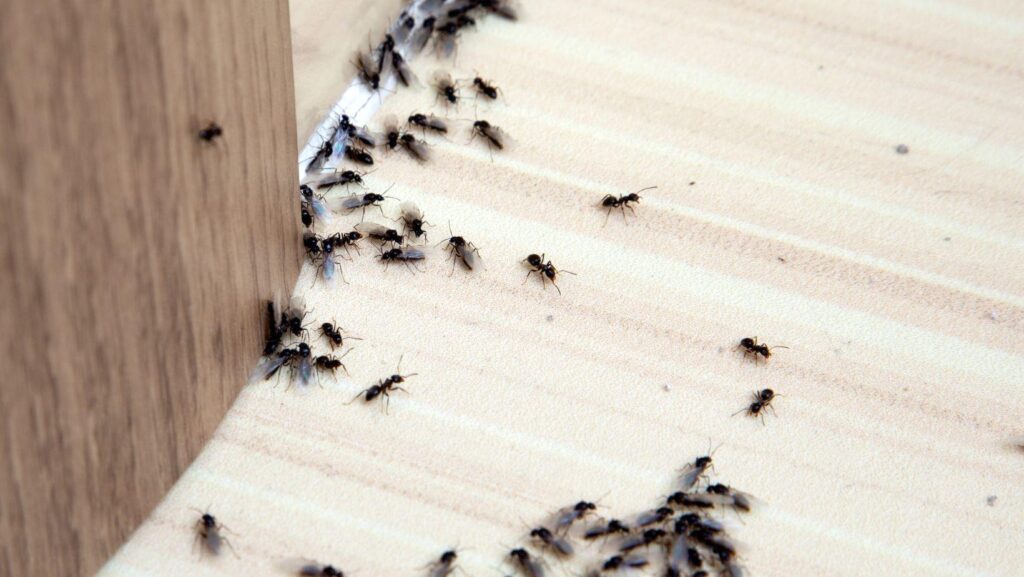
If you’ve noticed more ants crawling across your kitchen counter or patio table lately, you’re not imagining things. What starts as an occasional sighting in April or May can turn into a daily battle by July. Alabama’s summer weather, hot, humid, with sudden downpours followed by stretches of dry heat, creates near-perfect conditions for ant colonies to grow fast and search harder for what they need. Once you understand what’s actually driving that shift, dealing with it becomes a lot less overwhelming.
The Heat Speeds Everything Up
Ants are cold-blooded, which means their development speed is tied directly to temperature. When summer heat arrives, eggs hatch faster, larvae mature faster, and colonies that grew slowly through the cooler months suddenly start expanding at a much quicker pace. More ants hatching means more workers out foraging, and more workers foraging means a lot more ants showing up in places you’d rather they didn’t.
Humidity plays right alongside the heat. Alabama’s summer air stays thick with moisture most days, and that consistent dampness in the soil and vegetation supports larger colonies than you’d see in a drier climate. This combination helps explain why ants in alabama summer become such a predictable, recurring headache for homeowners rather than a random inconvenience. A colony that stayed small and unnoticed through spring can balloon in size by the time summer really hits its stride.
Rain and Dry Spells Both Send Ants Toward Your House
Alabama summers rarely stay one way for long. You’ll get a stretch of heavy afternoon storms, then a week or two of nothing but dry heat, and each of those extremes pushes ants toward your home for different reasons.
When it rains hard, shallow underground nests flood out, and colonies relocate to higher, drier ground fast. That usually means moving toward your foundation, your porch, or the base of an exterior wall, since these spots typically stay drier than open yard during a storm. Then once things dry back out, the opposite problem kicks in: ants start hunting for water because the ground and plants around them aren’t providing it anymore. That’s when a kitchen sink, a leaky bathroom fixture, or condensation dripping off your AC unit suddenly looks a lot more appealing to a thirsty colony.
More Food Around Means More Ants Around
Summer just naturally brings more food into the picture. You’re grilling more, eating outside more, and there’s a good chance fruit trees or bushes in the yard are dropping ripe fruit that starts fermenting on the ground within days. All of that adds up to more crumbs, more spills, more sugary residue sitting around than you’d find during cooler months.
If you’ve got a fig tree, citrus, or any stone fruit growing in the yard, keep an eye on the ground beneath it. Rotting fruit is basically an open invitation for ants, and it often creates a concentrated hot spot of activity in one corner of the yard that eventually connects to a trail leading straight toward your house. Indoors, more grilling and more outdoor entertaining usually means more traffic through the kitchen too, which naturally leads to more crumbs and spills than you’d have during a quieter time of year.
Where You’re Most Likely to See Them
A few spots in the house tend to show summer ant activity more than others, mainly because they check multiple boxes ants are looking for at once. Kitchens top the list, no surprise there, since food and moisture both concentrate in one room. Bathrooms come in a close second, especially during dry spells, when sinks and tubs become one of the only reliable water sources around.
Foundations and exterior walls pick up more trail activity too, particularly after a heavy storm pushes displaced colonies toward higher ground. And patios or outdoor eating areas round things out, drawing ants straight to whatever food or drink residue gets left behind during backyard hangouts. Knowing which spots tend to draw the most activity helps you focus your effort instead of feeling like you need to treat the entire house at once.
DIY Steps That Actually Help
The good news is that most summer ant problems respond well to some basic cleaning and moisture control, done consistently rather than just once. Here’s what actually moves the needle:
Don’t skip the trails you already see, either. Wiping an active ant trail down with soapy water breaks up the scent trail other ants are following, which at least slows things down temporarily even if it doesn’t solve the root problem.
Close Up the Gaps They’re Using to Get In
Cleaning and moisture control handle part of the equation, but physically blocking entry points matters just as much. Small gaps around windows, doors, and anywhere a pipe or cable passes through an exterior wall are often all it takes for a scout ant to find a way inside. Once you start really looking, you’ll probably find more of these gaps than you expected.
Caulk any visible cracks in the foundation, swap out weatherstripping that’s looking worn on exterior doors, and double check the seal around any vents or pipes going through outside walls. This kind of sealing work pairs really well with the cleaning and moisture steps above, since you’re tackling the problem from both angles at once instead of just cleaning up after ants that keep finding new ways in.
Final Analysis
Between the heat speeding up colony growth, the back-and-forth of heavy rain and dry spells, and all the extra food sitting around during grilling season, summer in Alabama creates a perfect storm for ant activity right as most people are spending more time outdoors and running the AC harder, which adds even more condensation to the mix. That’s the real story behind why ants in Alabama summer shows up so consistently across kitchens, bathrooms, foundations, and patios this time of year. Staying on top of cleaning, storing food properly, watching for moisture, and sealing up small gaps won’t make ants disappear entirely, but it’ll go a long way toward keeping things manageable through the hottest months.