
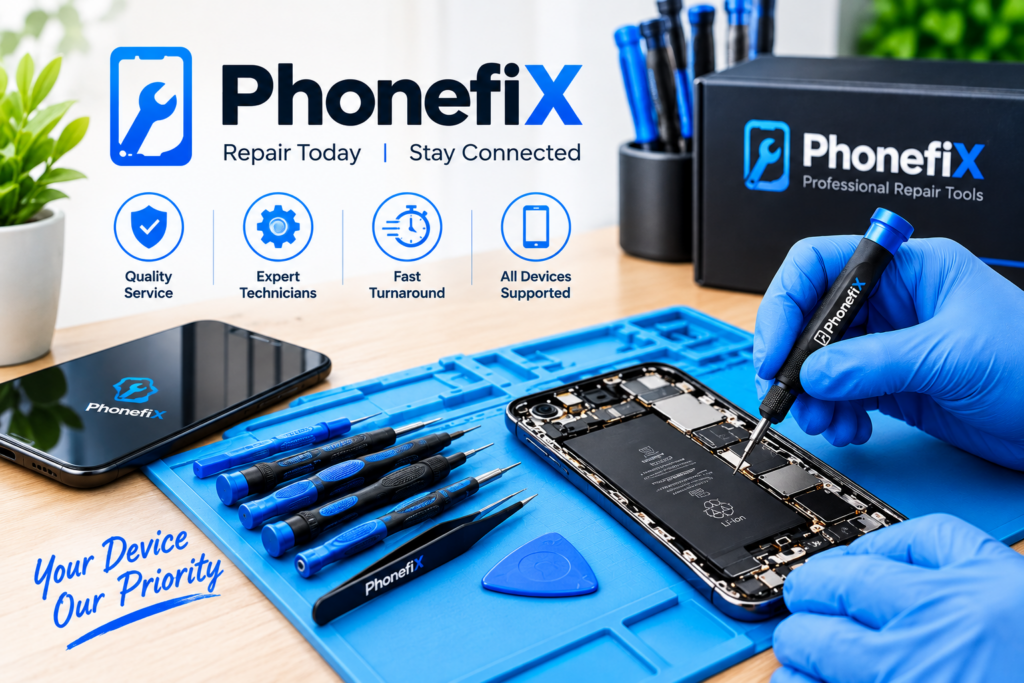
Embarking on a smartphone repair journey can feel both thrilling and daunting. Whether you are setting up a professional service bench or simply looking to expand your technical skills, the right gear is the difference between a successful fix and an expensive paperweight. Modern smartphones pack micro-components, tightly wound ribbon cables, and robust waterproof adhesives that demand respect and precision.
Before you lift a glass panel or replace a blown-out battery, you need a reliable kit. Proper phone repair tools protect sensitive internal circuits and ensure every screw goes back exactly where it belongs. In this comprehensive guide, we will break down the essential gear required to tackle mobile device maintenance successfully, why each item matters, and how to set yourself up for smooth, frustration-free fixes.
1. Precision Screwdrivers and Fastener Management
Modern mobile devices rarely share uniform hardware standards. From proprietary Tri-point screws found across Apple iPhone assemblies to microscopic Pentalobe, Phillips, and Torx fasteners securing Android flagships, using the wrong driver can instantly strip hardware threads.
- Magnetic Precision Driver Sets: High-grade magnetic screwdrivers are essential on any bench. Magnetic tips securely hold tiny fasteners during disassembly and reassembly, keeping them from dropping into internal cavities or bouncing off your desk.
- Magnetic Project Mats: Organization prevents long-screw damage (a critical mistake where inserting a longer screw into a short socket pierces the underlying motherboard layers). Project mats feature grid layouts to keep every single fastener organized in its exact order of removal.
2. Safe Opening and Disassembly Instruments
Clearing exterior screws is only the first step. To lift glass panels or back covers without causing structural damage, technicians must cut through factory perimeter adhesives designed for IP68 dust- and water-resistance.
- ESD-Safe Spudgers and Prying Picks: Non-conductive nylon spudgers and anti-static plastic picks let you safely disconnect battery terminals, screen flex cables, and delicate camera modules without short circuits or scratches to PCB traces.
- Heavy-Duty Vacuum Cups and Opening Pliers: For screens glued tightly against aluminum or glass frames, specialized vacuum pliers apply smooth, balanced lifting force to open a clean gap for prying picks.
3. Dedicated Screen Repair Tools
Display replacement remains one of the most frequent service requests in mobile maintenance. However, separating screen layers or replacing full OLED modules without ruining backlight films or tearing flex connectors demands controlled thermal separation.
Specialized screen repair tools protect technicians from costly mistakes like shattered digitizers, cracked OLED substrates, or cut flex cables.
- LCD Heating Separator Platforms & Heat Guns: Thermal heating pads are essential for softening tough waterproof adhesives. Controlled surface heat lets prying picks slice smoothly along perimeter seals without dangerous mechanical pressure.
- Molybdenum Wire & OCA Cleaning Supplies: For technicians doing advanced glass refurbishing, ultra-fine molybdenum cutting wire glides cleanly between glass layers, while specialized adhesive solvents remove remaining Optical Clear Adhesive (OCA) without clouding display films.
4. Micro-Soldering and Board-Level Gear
While introductory repairs focus on modular replacements such as charging ports, speakers, or battery swaps, repairing charging ICs, audio coders, or torn flex traces requires micro-soldering.
- Calibrated Soldering and Hot-Air Rework Stations: Temperature accuracy is critical for component replacement. Controlled thermal airflow prevents heat soak on surrounding ICs while cleanly lifting damaged micro-components.
- ESD-Safe Micro Tweezers: Curved, ultra-fine tweezers let technicians manipulate jumper wires, microscopic filter caps, and camera shielding under stereo optical zoom.
Why Diy Fix Tool Is the Best Partner for Mobile Repair
When equipping a commercial workshop or personal lab, equipment reliability directly dictates your service quality and output. Low-quality screwdrivers strip delicate hardware, uncalibrated heating stations run hot enough to scorch OLED panels, and sub-par tweezers lack the fine tips necessary for micro-work.
Diyfixtool.com stands out as an industry leader because it delivers professional-grade equipment built for daily bench demands.
- Professional Quality and Precision: Every item, from BGA reballing stencils and stereo microscopes to basic driver sets, is built to withstand rigorous daily shop use.
- Curated Equipment Catalog: Instead of spending hours sourcing unverified tools from multiple sources, technicians can equip their entire workshop through a trusted vendor that offers professional phone repair tools and dedicated screen repair tools.
- Reliable Bench Performance: Calibrated heating platforms, anti-static workstations, and precision hand tools help you maintain consistent quality, minimize rework rates, and perform clean repairs every time.
Equipping your workspace with high-grade gear from diy fix tool protects device integrity, streamlines your workflow, and builds a strong reputation for repair excellence.
How to Choose the Right Tools for Your Repair Business
Buying every available tool at once is rarely necessary. A better strategy is to start with the equipment you need for the repairs you perform most often.
Consider these priorities before purchasing:
- Identify your main services. Screen replacement, battery servicing, charging repairs, and motherboard work require different equipment.
- Check device compatibility. Confirm that opening tools, screwdrivers, fixtures, and replacement accessories suit the models you service.
- Prioritize safety and precision. ESD protection, suitable battery-handling equipment, and quality hand tools help reduce avoidable damage.
- Invest in stages. Start with frequently used tools and add specialized diagnostic or soldering equipment when demand justifies it.
- Consider long-term value. Durable tools, replaceable tips, and dependable supplier support can be more useful than choosing equipment on price alone.
A well-planned toolkit should support the business’s actual workload rather than simply fill the repair bench.
Frequently Asked Questions
Answer: DIY FIX TOOL supplies a full spectrum of mobile repair equipment, including precision magnetic driver sets, ESD-safe pry tools, suction display separators, heating platforms, DC bench power supplies, USB port analyzers, and advanced micro-soldering gear like BGA reballing stencils and thermal imager cameras.
2. What tools are needed for mobile phone repair?
The essential tools for mobile phone repair include a precision screwdriver set, plastic opening picks, a spudger, precision tweezers, a suction cup, and an anti-static mat. Professional repair services may also require a digital multimeter, microscope, soldering station, and specialized diagnostic equipment.
3. What are the most important Phone Repair Tools for professionals?
The most important phone repair tools for professionals depend on the services they provide. Precision screwdrivers, opening tools, ESD protection, and diagnostic equipment help with many repairs, while soldering stations and microscopes are valuable for advanced motherboard work.
4. What is the purpose of an anti-static mat in mobile phone repair?
An anti-static mat helps control electrostatic discharge when used as part of a properly grounded ESD-safe workstation. It helps protect sensitive electronic components during inspection, disassembly, and circuit-board repairs.
5. Can I repair a mobile phone without professional tools?
Some basic phone repairs may be possible without an extensive professional toolkit, but using unsuitable tools increases the risk of damaging the screen, screws, connectors, or battery. Model-compatible tools and manufacturer repair instructions help make the process safer and more reliable.