
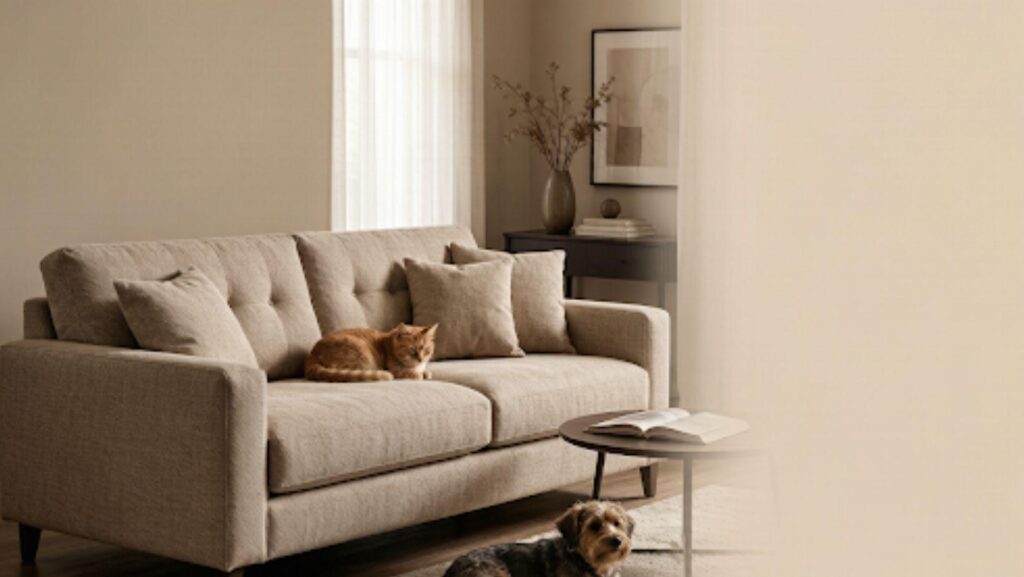
Your cat treats the armrest like a scratch post and your dog leaves a fur field after every nap. I have cleaned both off my own couch, so I feel your pain. The real secret is the fabric, and the right pet-friendly sofas start with a tight weave that claws cannot grab.
In this piece I break down which materials survive paws, which ones fail in weeks, and how to pick by pet type. You will know exactly what to order so your sofa outlasts the chaos.
Why weave beats everything
Claws catch on loops, so the enemy is any open or loose weave. Boucle, velvet, chenille and loose linen all have threads a cat can snag, and the damage piles up fast. A tight plain weave slides claws off instead of catching them.
Microfiber is the classic claw resistant pick. Its dense synthetic fibers leave no loop to hook, and fur sits on top where a lint roller grabs it. I vacuum mine weekly and the hair comes right up.
The fabric scorecard
|
Fabric |
Claw resistance |
Fur cleanup |
Best for |
|
Microfiber |
High |
Easy |
Cats and dogs |
|
Performance (Crypton, Revolution) |
High |
Easy |
Heavy accidents |
|
Top grain leather |
Medium, ages well |
Very easy |
Dogs |
|
Tight polyester |
High |
Easy |
Cats |
|
Boucle or velvet |
Low |
Hard |
Skip with pets |
Performance fabrics like Crypton and Revolution build the stain guard into the fiber, not just a surface spray. Spills bead up and wipe clean, and the color holds through many wash cycles. They cost more up front but last for years.
Leather is not off the table
Top grain leather does not trap fur and wipes clean in seconds. Light claw marks blend into the patina over time, which I actually like. The catch is that a committed cat scratcher can still puncture it, so give them a post near the sofa.
Vegan leather is the budget cousin. It wipes down the same way and resists fur, though it will not age like real leather. For a first pet sofa, it is a fair trade.
Pick by your pet
Cat homes should go microfiber or a tight performance weave, full stop. No loops, no pile, nothing a claw can catch. Dog homes can add leather to the list because fur slides right off.
Heavy shedders should match the color to the coat. A cream sofa with a cream dog reads clean far longer than a dark fabric with the same dog. It is a small trick with a big visual payoff.
Color and pattern tricks
A busy weave or a subtle pattern hides fur between cleanings better than a flat solid. I chose a heathered gray and the weekly tumbleweeds nearly vanish. Save the bright white for a pet free guest room.
Dark is not always better. Black shows light fur just as much as white shows dark fur. Match the tone to your pet and the room light, not to a rule you heard once.
Most pet owners only think about the fabric, but the cushion construction matters just as much. Loose back pillows become fur traps in the seams, while attached or zippered covers you can wash beat them every time. Also check the Martindale rub score if the store lists it: a 100,000 plus rating means the weave survives daily claw traffic for years, not months. Pair a high rub score with a tight weave and a washable cover, and you have a sofa that looks good long after the puppy phase ends.
Slipcovers as backup
A washable slipcover over a pet sofa is cheap insurance. When the puppy phase is at its worst, you zip it off and wash it. I keep two on rotation so the sofa is never bare.
Tailor the cover to the frame. A loose throw slides and bunches, while a fitted cover stays put through a dog nap. Spend a little more on the fitted kind.
New puppy versus senior pet
A teething puppy chews edges, so skip leather for the first year and use a tight weave with a washable cover. A senior dog mostly sheds, so any hair resistant fabric works. Match the fabric to the life stage, not just the species.
Trim nails every two weeks. It is the free habit that protects every fabric on this list. A quick clip beats any material choice once the claws are short.
What the fabric costs
Microfiber is the value pick, often on sofas under six hundred dollars. Performance weaves add two to four hundred for the built in guard. Leather costs the most but lasts the longest with a pet.
Spend on the guard, not the logo. The stain treatment and tight weave do the work, so pay for those and skip the designer name.
Care habits that add years
Blot spills, never rub, and hit them with a clean cloth right away. A rubber glove dragged over the fabric lifts embedded hair better than a roller. I do this every weekend and the sofa stays presentable.
Baking soda left for thirty minutes then vacuumed absorbs odor without chemicals. A ten minute weekly routine beats a deep clean after the damage is done.
Odor control that works
Baking soda handles most pet smell, but enzyme spray breaks down the urine that sets in fabric. Keep a bottle near the sofa and treat accidents the same day. I learned this after one late night stain turned permanent.
Test any spray on a hidden seam first. Some cleaners lighten a tight weave, and you do not want a pale patch on the seat front.
Claw trimming is free protection
A two week nail clip removes the main weapon your cat has against the sofa. Pair it with a scratching post three feet from the couch and the furniture stops being the target. I saw the armrest survive once we moved the post.
Soft paws caps are an option for committed scratchers, though some cats hate them. Try the post first, then the caps if needed.
When to replace versus recover
If the frame is sound but the fabric failed, a professional recover costs less than a new sofa. Loose covers you can wash buy you years. I recovered one pet sofa for a third of a replacement and it looked brand new.
Replace only when the frame cracks or the cushions lose all spring. Fabric is the cheap part to fix, so do not trash a good frame over a scratched cover.
Temperature and fabric feel
Leather feels cool in summer and warm in winter, which dogs seem to like. Microfiber stays neutral and does not stick to fur in heat. I rotate a light throw so the cat has a warm spot without claiming the whole seat.
Avoid velvet even in performance form if you have a heavy shedder, because the pile traps hair deep. A flat weave is the easier daily clean.
Buying from a pet friendly line
Some brands tag a whole range as pet ready, which saves you the guesswork. Look for the tight weave, the washable cover and the rub score in one listing. I trust a labeled line more than a single claimed feature.
Read the care tag before you buy. It tells you if the cover is machine washable or spot only, and that one line predicts your weekly work.
Quick checklist
Choose a tight weave, skip boucle and velvet, match color to coat, and pick washable covers. Four checks and your sofa survives the paws.
You now know which fabric keeps the peace with your pets. The last step is picking a piece your crew cannot destroy.