
DIY camping hacks help people save time and pack less. They improve comfort and reduce waste. This guide lists ten simple projects that anyone can make before a trip. Each tip uses common items and clear steps. The reader will get fast wins for shelter, cooking, and safety. The ideas work for weekend trips and longer backcountry stays.
Key Takeaways
- DIY camping hacks save time and reduce pack weight by using simple, common materials for shelter, cooking, and safety.
- A quick tarp lean-to and foam-seat pad enhance camp comfort while the milk crate gear shelf keeps equipment clean and organized.
- Compact cooking hacks like a soda can stove and baking sheet grill make meal prep efficient and lightweight for camping.
- Effective food storage with sealed bins and hanging bags protects against wildlife and weather during camping trips.
- Safety hacks include a basic labeled first-aid kit, DIY firestarter, signal mirror, whistle, and a simple navigation kit for emergencies.
- Charging devices with a solar battery bank and storing a paper emergency plan improve preparedness on all camping outings.
Camp Setup And Comfort: Quick Builds To Save Time And Space
Camp Setup And Comfort: Quick Builds To Save Time And Space
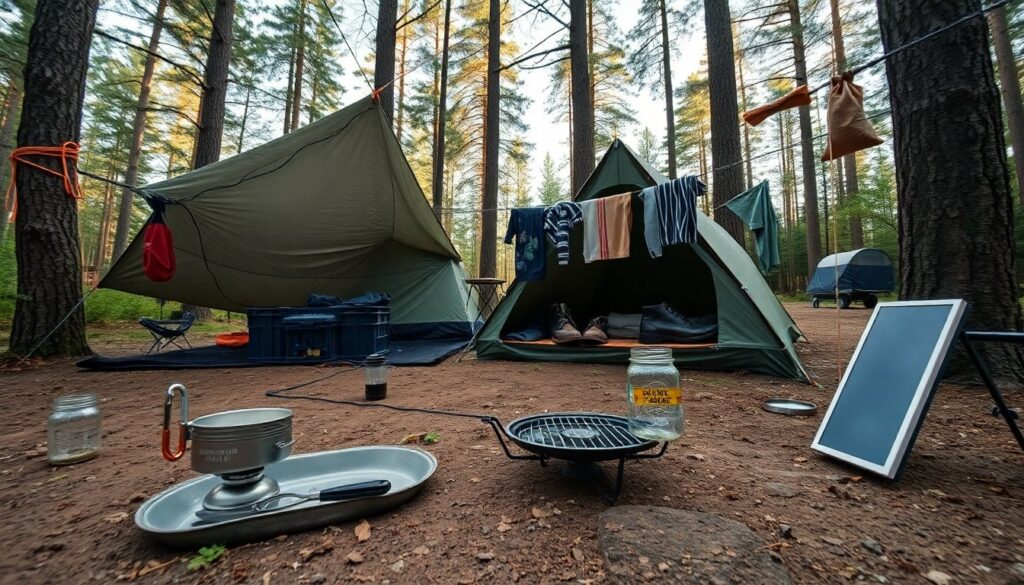
They start with a compact shelter plan. Use a tarp and cord to make a fast lean-to. Fold the tarp, tie the cord around a tree, and stake the corners. This shelter blocks wind and rain and weighs little.
They make a foam-seat pad from closed-cell foam. Cut a foam camping pad into two pieces. Stack the pieces for a thick seat. The pad fits under a sleeping bag at night.
They build a simple clothesline. Tie cord between trees. Use carabiners or clothespins to hang wet clothing. The line dries clothes faster and keeps the site tidy.
They convert a milk crate into a gear shelf. Flip the crate and strap it to a low branch. Put shoes and cooking tools inside the crate. This keeps gear off the ground and away from dirt and bugs.
They craft a lantern stand from a small tripod. Screw a carabiner to the tripod head. Hang a lantern or a water bottle with string from the carabiner. This spreads light across the camp and frees hands.
They protect a tent floor with a footprint made from an old shower curtain. Lay the curtain under the tent and cut it to size. The curtain blocks moisture and lasts through several trips.
They use zip ties and a ruler to make quick stake extenders. Insert a short piece of sturdy plastic into a stake hole. The stake becomes easier to pull and less likely to bend.
Cooking, Food Storage, And Clean-Up Hacks That Work In The Wild
Cooking, Food Storage, And Clean-Up Hacks That Work In The Wild
They choose a compact stove strategy. Use a soda can alcohol stove for ultralight trips. Cut two empty cans, fit them together, and add small holes near the base. The stove boils water and packs small.
They repurpose a baking sheet as a grill. Place the sheet over hot coals to cook vegetables or fish. The sheet cleans easily with sand and water.
They store food in hard plastic bins with scented bags. Put strong-smelling items in sealed bags first. Place the bags in a plastic bin with a tight lid. The method reduces wildlife visits and keeps food dry.
They use a hanging food bag system. Toss a rope over a high branch, attach a bag, and hoist it 10 to 12 feet from the ground. The bag stays away from animals and rain.
They build a simple dish-washing station. Use two collapsible buckets. Fill one with soapy water and the other with clean water. Rinse dishes in the second bucket and pour wastewater in a cathole at least 200 feet from water.
They make single-serve spice vials from pill bottles. Label each bottle and fill it with a common spice. The small bottles save space and cut cross-contamination in camp cooking.
They create a coffee drip from a paper towel and a jar. Place a paper towel in a jar lid, add grounds, and pour hot water slowly. The jar collects coffee without bulky filters.
Safety, Navigation, And Emergency DIY Solutions You Can Make Tonight
Safety, Navigation, And Emergency DIY Solutions You Can Make Tonight
They prepare a basic first-aid kit with labeled items. Pack adhesive bandages, antiseptic wipes, tweezers, and blister pads. Add a small roll of medical tape. Keep the kit in a dry zip-top bag.
They make a signal mirror from a compact mirror or polished metal. Cut a small square, punch a hole, and attach a cord. The signal mirror flashes sunlight toward rescuers.
They craft a DIY firestarter from dryer lint and wax. Stuff lint into a small paper cup, melt wax over the lint, and let it cool. The firestarter lights easily with a spark.
They build a whistle from an empty film canister. Punch three small holes in the cap and blow. The whistle creates a loud, consistent sound that carries at night.
They prepare a simple navigation kit. Put a map, compass, and marker in a waterproof bag. Mark key waypoints and emergency exits on the map before leaving camp.
They make a lightweight splint from foam and duct tape. Place a straight branch against an injured limb, wrap foam around the limb, and tape it in place. The splint limits movement and eases transport to help.
They charge devices with a solar battery bank. Place the bank in direct sun and point the panels toward the brightest light. The bank recharges phones and small lights for communication in an emergency.
They store a paper emergency plan in the pack. Write names, emergency contacts, and medical info on a sheet. Seal the sheet in a zip-top bag. The plan helps rescuers and friends act quickly.