
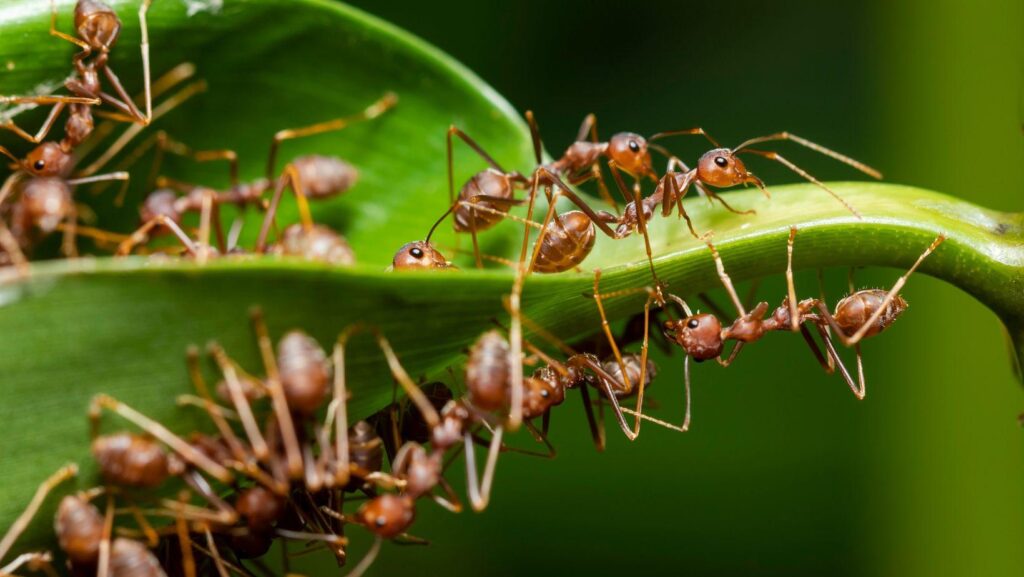
Ant colonies are remarkable examples of organization and survival. A single ant has limited ability to change its surroundings, but thousands of ants working together can create extensive networks of tunnels, chambers, and pathways. Their nests provide shelter, regulate movement, and help the colony respond to changes in temperature, moisture, food availability, and threats.
The way ants construct and manage these environments also offers useful lessons for homeowners. Ants can establish colonies in soil, gardens, beneath patios, around foundations, and sometimes inside parts of a building. Because much of their activity can remain hidden, understanding how colonies operate can make it easier to recognize early warning signs and understand why simply removing visible ants may not solve the problem.
The Engineering Behind an Ant Colony
Many ant species create underground nests containing interconnected tunnels and chambers. Workers excavate soil, carry debris away from the colony, and gradually shape the nest according to the colony's needs. Some chambers may be used for brood, while other spaces provide protected areas for movement or temporary storage.
The structure is not designed by a single leader. Individual ants respond to chemical signals, physical conditions, and interactions with other workers. As a result, many simple actions combine to produce an organized nest.
The concept captured by the phrase ants natures engineers necessity inspiring creativity reflects the fascinating relationship between behavior and construction. Ants modify their surroundings to create structures that support their survival. When soil conditions change, a passage becomes unsuitable, or part of the nest is disturbed, worker ants adapt by rerouting pathways or creating new spaces.
That flexibility makes ant nests dynamic rather than permanent structures. Their design can develop over time as the colony grows and environmental conditions shift.
How Ants Regulate Movement and Work Together
An ant colony depends on coordinated movement. Workers communicate using chemical signals and other forms of contact, allowing them to establish trails between the nest and useful resources. Once a productive route develops, additional workers may follow it, creating a visible line of repeated activity.
Different workers can perform different tasks depending on the needs of the colony. Some forage for food, others care for developing ants, while others maintain the nest or respond to threats. The exact organization varies among species, but cooperation allows the colony to accomplish tasks that would be impossible for an individual ant.
For homeowners, these behaviors explain why recurring ant trails deserve attention. A line of ants crossing a patio or following a foundation is rarely just random movement. It may indicate a regular connection between a nesting location and a food or water source.
Following the trail can provide valuable information. Ants may disappear beneath paving, enter cracks near a foundation, move through landscaping, or travel along a wall toward an indoor entry point. Observing these routes can reveal where conditions are supporting continued activity.
Adapting Nests to Soil, Gardens, and Structures
Ants live in remarkably varied environments. Some species prefer dry soil, while others seek areas with greater moisture. Gardens can offer food, shelter, and favorable soil conditions, particularly where plants, mulch, irrigation, and organic material are present.
Structures can provide additional opportunities. Small gaps around foundations, patios, doors, windows, pipes, and other exterior features may give ants access to protected areas. Cracks beneath paving or retaining walls can also become useful routes between outdoor nesting areas and buildings.
The adaptability of ants means environmental changes can alter their behavior without eliminating the colony. Heavy irrigation may make one section of soil less suitable while creating favorable moisture somewhere else. Removing vegetation can disturb a nesting site, potentially causing ants to search for another location nearby.
Construction and landscaping can have similar effects. Digging, grading, replacing soil, installing paving, or removing plants can disturb established nests. Afterward, increased activity around neighboring structures may be noticeable as ants search for alternative routes and resources.
This adaptability is another reason ants natures engineers necessity inspiring creativity is a useful way to connect ant biology with their impressive building behavior. Their nests are practical responses to the conditions around them, and the colony continually adjusts those structures as circumstances change.
Why Ant Colonies Can Be Difficult to Eliminate
One of the biggest challenges in dealing with ants is that the insects visible to a homeowner are usually only a small part of the colony. Foraging workers may be traveling considerable distances from a concealed nesting site. The queen and developing ants can remain protected elsewhere, while workers continue searching for resources.
Consequently, killing individual ants does not necessarily address the colony. If the underlying nest remains active and attractive conditions continue to exist, new workers can replace those that have disappeared.
Nest location also matters. Colonies may exist beneath soil, stones, patios, landscaping materials, wall voids, or other protected spaces. Multiple entrances or alternative routes can make the source difficult to identify through casual inspection.
Food and moisture can further encourage activity. Small amounts of accessible food, plant-derived resources, leaking outdoor fixtures, or damp soil may be enough to keep workers returning to an area. Reducing these attractants can therefore be an important part of long-term prevention.
Monitoring Foundations, Patios, and Outdoor Structures
Understanding ant behavior can make exterior inspections much more productive. Rather than waiting until ants appear indoors, homeowners can monitor areas where colonies are likely to establish routes.
Foundations deserve particular attention because cracks and gaps can provide access between soil and the building. Patios and paving should also be checked, especially around joints, edges, and areas where soil meets hard surfaces. Outdoor structures such as sheds, decks, retaining walls, and garden borders can provide additional shelter and movement routes.
A practical inspection should focus on repeated activity rather than a single ant. Look for trails that appear in the same location, ants disappearing into cracks, small soil disturbances, or activity concentrated near plants and moisture sources. Tracking these patterns over several days can help identify whether the activity is temporary or connected to an established route.
Homeowners can also reduce opportunities for ants by maintaining exterior areas. Sealing appropriate structural gaps, keeping unnecessary vegetation away from walls, correcting persistent moisture problems, and avoiding unnecessary accumulation of organic debris near buildings can make the property less favorable for continued activity.
If ants repeatedly enter a structure or activity persists despite basic prevention, professional pest assessment may help identify hidden nesting areas and movement routes that are difficult to locate during a routine inspection.
Final Analysis
Ant colonies demonstrate how cooperation, construction, communication, and adaptation can produce highly effective survival systems. Their tunnels provide protection, their trails organize movement, and their ability to respond to environmental changes allows colonies to persist in many different settings.
For homeowners, observing these behaviors provides practical information. Repeated trails can point toward food sources or nesting areas, while activity around foundations, patios, gardens, and outdoor structures can reveal potential entry routes. Paying attention to changes after landscaping or construction can also help explain sudden increases in activity.
A better understanding of ant behavior shifts pest prevention from simply reacting to visible insects toward identifying the environmental conditions and pathways that allow colonies to persist. That perspective can make monitoring more purposeful and help homeowners respond before an established colony becomes a larger household problem.