
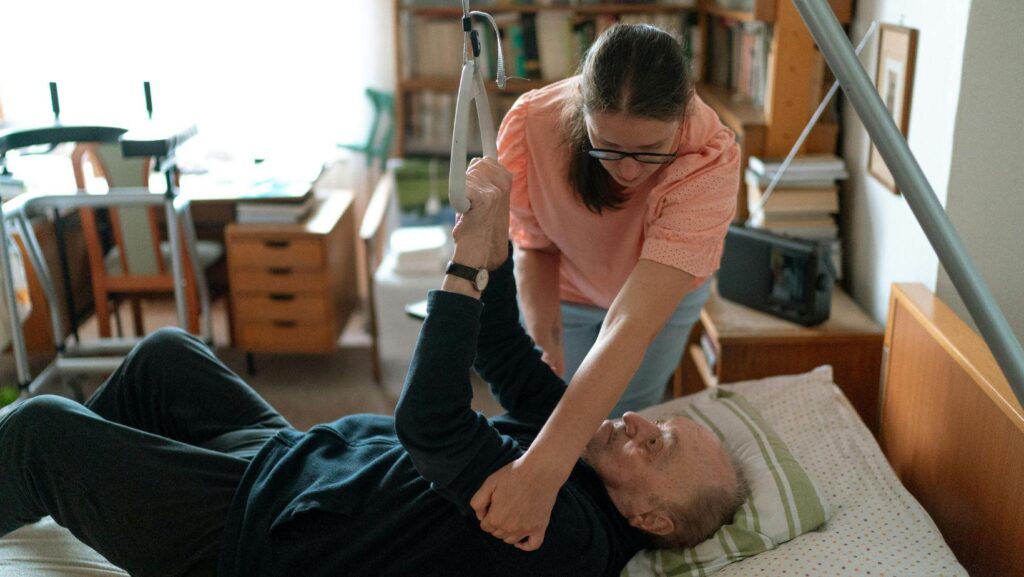
Around here, we usually talk about home projects that make daily life easier, from building a wheelchair ramp to organizing a cluttered garage. But a huge number of DIYers who tackle these projects are doing it for a specific reason: they’re caring for an aging parent, a spouse, or a family member with a chronic illness, and they’re modifying the home while also managing medications, appointments, and meals. That overlap is real, and it’s why so many people who visit this site for home hacks are quietly running on empty in another part of their life entirely.
If you’ve ever finished installing grab bars in a bathroom only to realize you haven’t sat down all day, you already know what caregiver strain feels like. It’s the accumulation of physical exhaustion, emotional wear, and constant vigilance that builds up when you’re responsible for another person’s well-being on top of your own. Understanding caregiver strain, what it is and how to navigate it is the first step toward catching the mistakes that make it worse before they snowball into something harder to recover from. Most of these mistakes are avoidable once you can name them.
Mistake #1: Taking on 100% of Care Responsibilities Alone
The most common trap caregivers fall into is assuming that asking for help is a sign of failure, or that no one else can do the job as well as they can. This mindset often starts small, maybe you decline an offer from a sibling because it’s easier to just do it yourself, and over months it hardens into a pattern where you’re the only person who knows the medication schedule, the doctor’s preferences, and the daily routine. Eventually you become a single point of failure, and any illness or emergency on your end leaves the person you’re caring for without a backup plan.
The fix isn’t complicated, but it requires deliberate effort. Start by writing down every task involved in caregiving, from grocery runs to appointment scheduling, and identify at least three that someone else could take over with minimal training. Reach out to local respite care services, adult day programs, or even a rotating schedule with siblings so that you’re not the only name on the list. Building this network before you’re desperate for it means you have people already familiar with the routine when you need a break.
Mistake #2: Ignoring Your Own Physical and Mental Health
Caregivers frequently treat their own health as optional, skipping annual checkups, ignoring back pain from lifting, or pushing through symptoms of depression because there’s simply no time to address them. This self-neglect compounds quietly, and by the time it becomes obvious, it often shows up as a serious health event rather than a manageable inconvenience. Research shows this isn’t a rare outcome, with a median prevalence of depression among informal caregivers landing at 33.35% across recent peer-reviewed studies, a number that reflects just how physically and emotionally taxing this role can be.
Recovery starts with treating your own health appointments as non-negotiable, the same way you’d treat a doctor’s visit for the person you’re caring for. Keep a simple log of your sleep, mood, and physical symptoms so patterns become visible before they turn into a crisis. If you notice persistent sadness, irritability, or exhaustion that doesn’t improve with rest, talk to your doctor or a counselor rather than assuming it will pass on its own, because early intervention is far easier than crisis management later.
Mistake #3: Underestimating Time Demands and Overcommitting
Many caregivers agree to responsibilities based on how much time they think caregiving will take, not how much it actually takes once daily reality sets in. This leads to a familiar spiral: you commit to a job, a volunteer role, or a home renovation project on top of caregiving, and then find yourself stretched thin when the real hours add up. Recent survey data shows caregivers average 22.8 hours per week on caregiving tasks, with nearly a third spending more than 30 hours weekly, numbers that rival a part-time or full-time job on their own.
The fix is to track your actual caregiving hours for two weeks before committing to anything new, whether that’s a work project or a home improvement task like remodeling a bathroom for accessibility. Once you have real numbers, set boundaries based on that data rather than optimism, and be willing to say no to additional commitments that don’t fit. This kind of honest time accounting protects both your energy and the quality of care you’re able to provide.
Mistake #4: Failing to Plan Financially and Legally
Caregivers often delay conversations about power of attorney, long-term care insurance, or estate planning because these topics feel uncomfortable or premature. This avoidance creates a dangerous gap, because when a health crisis hits, families are forced to make major legal and financial decisions under extreme stress, often without the paperwork or authority needed to act quickly. Disorganization during a crisis multiplies stress exponentially, turning a difficult moment into a chaotic one.
The solution is to schedule a meeting with an elder law attorney or financial planner early, well before a crisis forces the issue, and to keep all essential documents in one accessible location. According to this article, coaching, support programs, and care coordination services can meaningfully improve caregiver outcomes, yet most caregivers never access them, largely because they don’t know these resources exist or assume they can’t afford them. Taking the time to research what’s available in your area, from local Area Agencies on Aging to nonprofit caregiver coalitions, can close that gap before a legal or financial emergency forces a rushed decision.
|
Statistic |
Figure |
|
Unpaid family caregivers in the U.S. (2024) |
37 million Americans |
|
Caregivers reporting weekly or daily burnout |
78% |
|
Average weekly caregiving hours |
22.8 hours; 30% exceed 30 hours/week |
|
Median depression prevalence among caregivers |
33.35% |
|
Caregivers reporting high emotional stress |
36% (20% report high physical strain) |
None of these mistakes are personal failings, they’re patterns that emerge naturally when someone is stretched between caregiving duties, work, and home responsibilities without a clear system in place. Recognizing them early, whether it’s the urge to do everything alone, the tendency to skip your own doctor’s appointments, or the avoidance of legal paperwork, gives you a real chance to change course before burnout takes hold. Just as you’d plan out a home renovation project step by step rather than improvising as you go, caregiving benefits from the same kind of intentional structure, one that protects your energy as much as it protects the person you’re caring for.