Every experienced DIYer knows the rule: the right preparation makes the difference between a project that goes smoothly and one that turns into an expensive lesson. You research the job, buy the right tools, clear the workspace, and put on your PPE. But there’s one item that almost never makes the prep list — and it’s the one that matters most when something goes seriously wrong.
Coast2Coast Milton CPR Training is available to homeowners and renovators in the area, and for anyone spending significant time on ladders, power tools, or electrical projects, getting certified is a more practical safety investment than most people realize.
What Can Actually Go Wrong on a DIY Project?
Home renovation carries more physical risk than most hobbies. The tools are powerful, the environments are unpredictable, and the people doing the work are often self-taught — which means they may not fully appreciate how quickly an ordinary situation can turn dangerous.
Here’s a realistic look at the emergencies that happen on home improvement projects:
Severe cuts and lacerations from circular saws, jigsaws, chisels, and utility knives are among the most common serious injuries. A cut that hits an artery requires immediate intervention — applying direct pressure, maintaining it, and getting emergency services on the line fast. Fumbling without training in that moment costs precious minutes.
Falls from height are one of the leading causes of serious injury in residential settings. A fall from a second-rung ladder doesn’t sound like much until someone is unconscious on a concrete garage floor. A trained first aider knows not to move a casualty with a suspected spinal injury, how to keep the airway open, and how to monitor breathing while waiting for an ambulance.
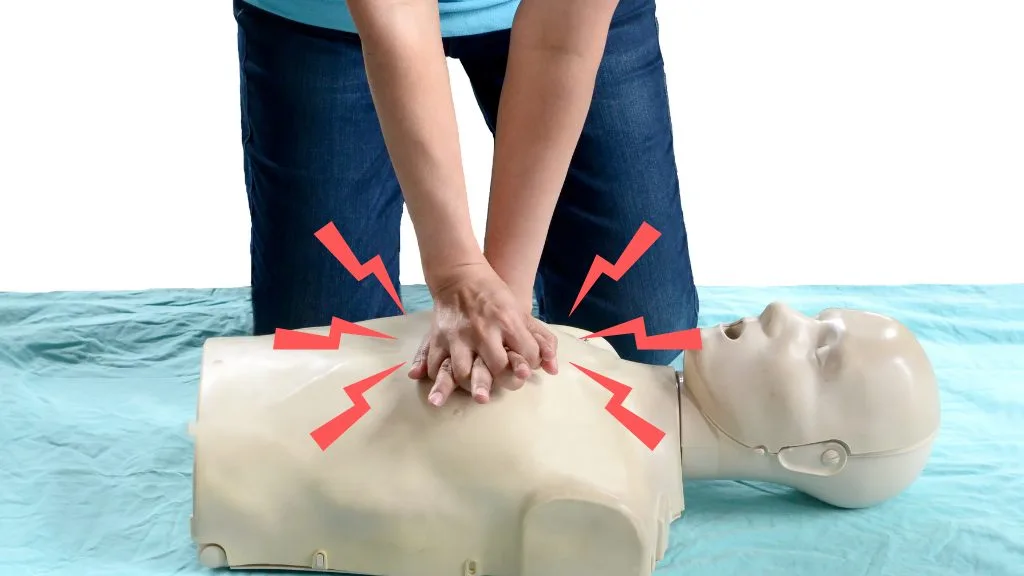
Electrical contact can cause cardiac arrest instantly. This is not a fringe scenario — it happens during amateur electrical work more often than most people want to acknowledge. Someone who has been shocked may appear to have recovered, then deteriorate suddenly. Knowing CPR and how to use an AED in those minutes between contact and ambulance arrival is the direct variable between life and death.
Cardiac events from physical exertion are underappreciated. Moving heavy materials, working in heat, prolonged overhead work — these all place cardiovascular stress on the body. According to the Heart & Stroke Foundation, approximately 40,000 cardiac arrests occur outside of hospital settings in Canada each year. DIY projects create exactly the kind of physical conditions that elevate that risk, particularly for adults over 40 who may not be aware of underlying conditions.
What CPR Training Actually Teaches You
A Standard First Aid and CPR/AED Level C course runs through a practical range of emergency scenarios — not just cardiac arrest. Here’s what you come away with:
The course is available in blended learning format: theory online at your own pace, hands-on practical skills in person. For Milton homeowners balancing work, kids, and weekend projects, this means minimal disruption. The in-person component typically takes a few hours. The certification is valid for three years (Standard First Aid) and one year (CPR/AED), and it’s recognized by WSIB and meets Ontario’s Occupational Health and Safety Act requirements — relevant for anyone who has a home-based business or regularly works on projects with contracted help.
The Partner Problem
Here’s the scenario most DIYers don’t think about: you’re working alone, or with a partner who has no more training than you do. Something goes wrong. One of you is the casualty. The other is standing there trying to remember what they half-watched on a first aid video three years ago.
The blunt reality is that bystander CPR doubles or triples the chance of survival for a cardiac arrest victim. That’s the Heart & Stroke Foundation’s data, not an estimate. The skill that makes the difference is not complicated — but it needs to be practised, not just read about.
Two trained people on a job site is a genuinely safer situation than one. If you do DIY projects with a partner, a family member, or a neighbour, getting both of you certified at the same time is one of the smartest dual-purpose investments you can make before the next big project kicks off.
How to Fit It Into Your Project Calendar
The natural time to get certified is before the big jobs start — not after your first close call. Think of it as part of the project prep phase, alongside ordering materials and renting equipment.
You can learn more at their site to explore scheduling and course formats that work around your timeline.
Standard First Aid certification covers a three-year window, so one course gives you coverage through multiple renovation seasons. Pair it with annual CPR renewal — which takes far less time than the initial course — and you’ve built a low-maintenance safety system that runs in the background of everything you build.
If you are looking for CPR certification or first aid training near Nipissing Road, the Milton GO Station area, or surrounding communities in Milton and Halton, you may reach out to Coast2Coast First Aid & Aquatics in that area.
FAQS
Q: Do I really need first aid training for DIY home projects? A: If you regularly use power tools, work at height, handle electrical systems, or do physically demanding renovation work, then yes — it’s a genuine safety measure, not a formality. The emergencies that happen on home improvement projects are exactly the kinds that a Standard First Aid and CPR/AED course prepares you for: severe cuts, falls, electrical injuries, and cardiac events triggered by physical exertion.
Q: What is the difference between a CPR course and a Standard First Aid course? A: A CPR/AED Level C course focuses specifically on cardiac arrest response — compressions, rescue breaths, and AED use. Standard First Aid is a broader certification that includes CPR content plus wound management, fractures, spinal injuries, shock, choking, and other emergency scenarios. For a DIY renovator, Standard First Aid is the more complete option.
Q: How long does Standard First Aid certification last in Ontario? A: Standard First Aid certification is valid for three years in Ontario. CPR/AED Level C certification requires annual renewal. Most people schedule their CPR renewal each year and their full First Aid recertification every three years on the same cycle.
Q: Can I do the theory portion of first aid training online? A: Yes. Blended learning courses allow you to complete the theory component online at your own pace and then attend a shorter hands-on in-person session. For busy homeowners, this format means you’re not clearing a full day from your schedule — the in-person component typically runs a few hours.
Q: What should I have on-site during a major DIY project in case of emergency? A: At minimum: a fully stocked first aid kit appropriate for the type of work being done, knowledge of where the nearest AED is located, and at least one person on site who is CPR and first aid certified. For electrical or structural work, it’s also worth ensuring someone on site knows the emergency shut-off locations and has the local emergency services number readily accessible.